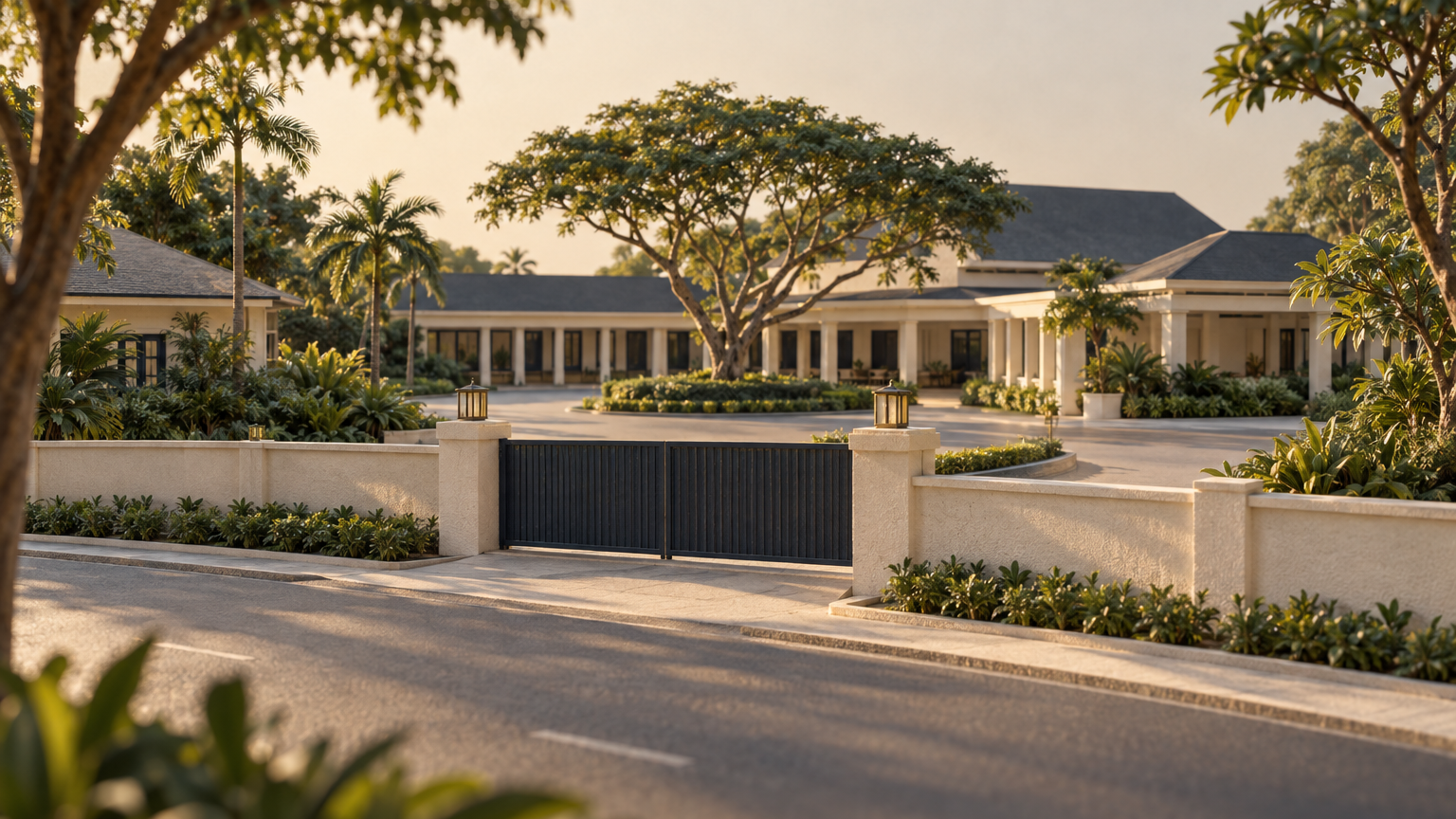
The land formerly occupied by Raffles Town Club at 1 Plymouth Avenue has reached its next housing milestone. On 27 October 2026, the Urban Redevelopment Authority (URA) made the Plymouth Avenue/Dunearn Road parcel available for developer application, with an estimated capacity of 250 homes. The release came ten days after the lease-expiry date set for the club land.
Alongside it, URA released a larger Chuan Grove parcel estimated to accommodate 930 homes. Together, the two sites represent about 1,180 potential homes, calculated from URA’s estimates. For buyers watching these locations, the important distinction is timing: both are on the Government Land Sales Reserve List, so this is an opportunity for developers to seek a land tender—not the opening of apartment sales.
From club land to a residential address
The Plymouth Avenue release follows a redevelopment decision announced years earlier. In November 2023, the Singapore Land Authority and URA said the lease for the land occupied by Raffles Town Club Pte. Ltd. would not be renewed when it expired on 17 October 2026. The agencies earmarked the land for future residential development and required its return to the State upon expiry.
That chronology matters. The October 2026 release advances an already announced change of use; it is not a newly disclosed decision to replace the club with housing. The evidence establishes the lease deadline and the subsequent land-release milestone, rather than a demolition or construction timetable.
The proposed use also goes beyond apartments. URA identifies Plymouth Avenue/Dunearn Road as residential land with commercial space on the first storey. Its conditions provide for up to 2,500 sq m of commercial gross floor area, including a supermarket of at least 1,000 sq m. That makes everyday shopping part of the site’s stated development requirements, rather than an amenity buyers must simply hope will appear.
What the two land parcels actually offer
Both sites carry 99-year leases, but their scale is quite different. Chuan Grove has a stated site area of 31,695.7 sq m and maximum gross floor area of 79,240 sq m, alongside its estimated 930 homes. Plymouth Avenue/Dunearn Road has a site area of 11,387.4 sq m, maximum gross floor area of 23,914 sq m, and an estimated 250 homes.
On those housing estimates, Chuan Grove could accommodate about 3.7 times as many homes as Plymouth Avenue/Dunearn Road. That is a useful comparison of development scale, not evidence that one will offer larger apartments, more generous facilities or a particular mix of homes. URA expressly notes that actual housing numbers may vary and final site areas remain subject to survey.
There is also a naming trap for anyone following Chuan Grove. A separate parcel with the same location name was launched in May 2025 with an estimated 505 homes. That earlier site measured 14,514.3 sq m and was subsequently awarded to Sing Holdings Residential and Sunway Developments. It is not the larger, 930-home Reserve List parcel in this release.
Keeping those parcels separate prevents an old tender result from being mistaken for progress on the newly available land. Their different site areas, housing estimates and sale stages identify two distinct land offerings.
Why applications come before a tender
“Available for application” describes a particular step in the Government Land Sales process. URA’s explanation says a Reserve List site will only be launched for tender when a developer submits an application with a minimum price acceptable to the Government. Making the land available therefore does not itself start that tender.
For a prospective buyer, this separates two very different kinds of availability: land that a developer can apply to buy, and homes that a household can purchase. The 27 October announcement concerns the first. It supplies planning capacity, but no apartment-sales opening date.
The next meaningful development to watch is whether either parcel moves from the application stage into a tender. Until then, the estimated homes belong to a potential development pipeline rather than an announced sales programme.
What a penthouse buyer can—and cannot—compare yet
For readers interested in top-floor living, the available figures answer a land-scale question, not a layout question. URA publishes maximum gross floor area for each development; these figures do not identify the enclosed living space, outdoor area or room arrangement of any individual apartment. At Plymouth Avenue/Dunearn Road, the commercial requirement also means the total development floor area is not wholly residential.
Dividing that floor area by the estimated home count would therefore produce a misleading shortcut for comparing future penthouses. It would mix a development-wide allowance with a provisional number of homes—and, at Plymouth Avenue, include space allocated to commercial uses. Neither site’s published parameters establish penthouse availability, terrace dimensions or apartment prices.
The useful comparison must wait for actual unit plans: how much space is indoors, how any terrace connects to the living rooms, and what roof access and maintenance responsibilities accompany it. Those are questions for a future housing offering, not answers contained in this land release. For now, the concrete change is that the former club land and the larger Chuan Grove parcel are available for developer applications; a tender is the next milestone that would move either closer to becoming homes.